How to Turn One Digital Product Into Multiple Income Streams
A lot of people assume they need a huge shop filled with dozens of products before they can make consistent sales online.
That is not always true.
Sometimes, the smartest thing you can do is take one strong digital product and find several ways to use, package, and promote it.
Instead of constantly creating something new, you can get more value from work you have already done.
Let’s say you created an ebook about social media marketing. That ebook does not have to remain one stand-alone product forever. It can become the foundation for a workbook, course, bundle, membership resource, or even a lead magnet.
Here are a few ways to turn one digital product into multiple income opportunities.
Sell the Original Product
Start with the most obvious option: sell the product exactly as it was designed.
Your original product should solve a specific problem and help the customer achieve a clear result.
That could be an ebook, planner, template, workbook, checklist, spreadsheet, course, or printable.
Do not rush past this stage. Before expanding the offer, make sure the original product is useful, easy to understand, and clearly presented.
A strong core product gives you something solid to build around.
Create a Bundle
Once you have your main product, think about what else the customer may need.
For example, an ebook about starting a business could be bundled with a business planner, startup checklist, and goal-setting worksheet.
A social media template pack could be bundled with caption prompts and a content calendar.
The bundle should feel like a complete solution, not a random collection of files.
Bundles can increase the value of an order because customers receive more help in one purchase.
Add an Upsell
An upsell is an additional offer presented after someone chooses the main product.
If the customer buys a budgeting spreadsheet, your upsell might be a complete financial planning bundle.
If they purchase an ebook, the upsell could be an editable workbook or video training.
The upsell should make sense as the next step. It should help the customer get a better result, complete the process faster, or receive additional support.
Turn the Product Into a Mini-Course
Some customers prefer to learn by watching or listening instead of reading.
You can take the main lessons from your digital product and turn them into short video or audio lessons.
You do not need a complicated studio setup. A clear screen recording, presentation, or talking-head video may be enough.
Include the original product as a course workbook or resource. This allows you to offer a higher-priced version without creating an entirely new topic.
Use Part of It as a Lead Magnet
A section of your product can become a free resource that helps grow your email list.
You might offer one chapter, a short checklist, a sample template, or a few workbook pages.
The free resource should be helpful on its own while naturally leading to the paid product.
For example, a free list of ten content ideas could lead to a full content-planning system.
This introduces potential customers to your style and gives you a way to continue communicating with them through email.
Add It to a Membership
If you have several related digital products, you can place them inside a membership library.
Members could receive access to the original product along with new templates, guides, or resources each month.
This creates recurring revenue and gives customers an ongoing reason to stay connected with your brand.
The key is consistency. Only promise a delivery schedule you can realistically maintain.
Create Different Versions
One product can sometimes be adapted for different audiences.
A general business planner could become a planner for coaches, beauty professionals, virtual assistants, or content creators.
The main structure may stay similar, but the examples, language, and sections should be adjusted for each audience.
This can help you reach more customers without recreating the entire product from the beginning.
Final Thoughts
You do not always need more ideas. Sometimes, you need a better plan for the product you already have.
Look at your current digital products and ask what else the customer may need before, during, or after using them.
Could you create a bundle? Add a training? Offer an upsell? Turn part of the product into a free resource?
One useful product can support several offers when it is packaged thoughtfully.
At Digital Profit House, our PLR and digital resources are designed to give you a foundation you can customize, expand, and turn into an offer that fits your audience.
Explore Digital Profit House products and find a resource you can turn into your next income-producing offer.
How to Choose Quality PLR Products and Build a Brand People Trust
PLR can help you launch a digital product faster, but not every PLR product is the same.
Some products give you a strong foundation that is easy to update and customize. Others may include outdated information, unclear licenses, or content that needs a lot more work than expected.
That does not mean PLR is a bad business model. It means choosing the right products matters.
Your customers may never know that you started with PLR, but they will notice whether the final product is useful, accurate, organized, and easy to understand.
Here is what to look for when buying PLR products for your business.
Start With the License
The license is one of the most important parts of any PLR purchase.
It explains what you can and cannot do with the product.
Before buying, check whether you can edit the content, add your business name, change the title, sell the finished product, or use parts of it in another offer.
Also look for restrictions.
Can you sell it on marketplaces? Can you include it inside a membership? Are you allowed to give customers the editable files? Can you transfer PLR rights to your buyers?
Never base your decision on the letters “PLR” alone. Read the terms connected to that specific product.
When in doubt, ask the seller for clarification before using the files.
Look Beyond the Cover
An attractive cover can catch your attention, but the value of the product is inside.
Review the product description carefully. Look at any available previews and read what is included.
Does the content have a clear structure? Does it cover a useful topic? Is it something your audience would actually use?
A beautiful product with very little substance may be difficult to sell. A simple product with clear information and a practical purpose can be much more valuable.
Choose usefulness first. You can always update the appearance to match your brand.
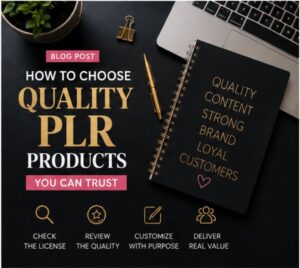
Make Sure You Can Customize It
One of the main benefits of PLR is the ability to make changes.
Look for products that give you enough flexibility to add your own voice, examples, and visual style. Depending on the format and license, this may include editable documents, templates, or design files.
Think about how you would make the product different.
Could you narrow it to a specific customer? Add a bonus? Create a new cover? Include a tutorial? Rewrite the examples?
The product should give you a strong starting point without forcing you to sell something that feels generic.
Review the Information Carefully
Even high-quality PLR should be checked before it is published.
Read every page. Look for spelling errors, unclear instructions, broken links, and information that may no longer be accurate.
You are responsible for the finished product you sell to your customers.
If the topic involves business, finance, health, law, or another specialized area, take extra care with the claims being made. Edit the content to stay within your knowledge and encourage customers to seek appropriate professional advice when necessary.
Trust is easier to protect than it is to rebuild.
Think About the Customer Experience
A good digital product is not only informative. It is also easy to access and use.
Ask yourself what the customer will experience after purchasing.
Are the files clearly named? Are there instructions? Is the layout readable? Do the links work? Will the customer understand where to begin?
Small details can make a big difference.
Add a welcome page or quick-start guide. Organize multiple files into labeled folders. Explain which programs are needed to open or edit the product.
A smooth customer experience makes your brand feel more dependable.
Avoid Selling the Original Product Without Changes
Uploading a PLR product exactly as you received it may be allowed under some licenses, but it rarely gives customers a reason to buy from you instead of another seller.
Make meaningful changes.
Adjust the product for a specific audience. Rewrite sections in your natural voice. Add your experience, examples, or recommendations. Improve the design and create a title that clearly communicates the result.
Think of PLR as the foundation of a house.
The foundation saves you time, but you still decide how the house looks, who it is for, and what makes it feel different from every other option.
Be Honest About What the Product Can Do
Trust-based marketing does not rely on unrealistic promises.
Avoid suggesting that a planner, ebook, or course will automatically make someone successful. Explain how the product can support them and what they will still need to do.
A content planner can help someone organize ideas, but they still have to create and publish the content. A business guide can provide a clear starting point, but results depend on how the information is applied.
Honest expectations attract customers who are a better fit and reduce disappointment later.
What Digital Profit House Stands For
At Digital Profit House, our goal is to make it easier for aspiring digital sellers to move from idea to action.
We believe PLR should help you save time without removing your creativity. It should give you a practical place to start while leaving room for your voice, audience, and brand.
We encourage every buyer to read the product description, review the included license, and customize the material before selling it.
Building a trustworthy digital product business is not about placing your logo on a file and hoping for quick sales. It is about choosing useful resources, improving them thoughtfully, and giving customers an experience that makes them feel confident purchasing from you again.
That is how a digital product shop becomes a real brand.
Explore the PLR and digital product collection at Digital Profit House, review the product details, and choose a resource you can confidently make your own.
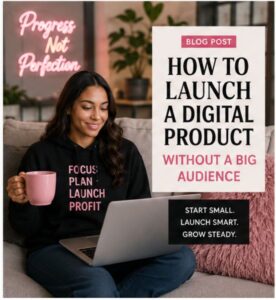
How to Launch Your First Digital Product Without a Big Audience
One of the most common reasons people delay launching a digital product is because they think their audience is too small.
They tell themselves they will launch after reaching 1,000 followers. Then 1,000 becomes 5,000, and the product continues sitting unfinished in a folder.
A large audience can be helpful, but it is not a requirement.
A smaller audience that understands your offer and trusts your recommendations can be more valuable than thousands of followers who are not interested in what you sell.
Your first launch does not need to be huge. It needs to be clear.
Here is how to introduce your digital product without waiting for a massive following.
Start With One Focused Offer
Launching becomes harder when you try to promote five unrelated products at the same time.
Choose one offer.
Make sure you can clearly explain who it is for, what it helps them do, and why it matters.
For example, “digital planner” is broad. “A weekly business planner for new virtual assistants” is more focused.
Your audience should not have to guess whether the product is right for them. A clear offer makes your marketing easier and helps the right people pay attention.
Create a Simple Message
You do not need a complicated launch slogan.
You need a message that connects the customer’s problem to your solution.
A simple formula is:
“You are struggling with this. Here is why it feels difficult. This product gives you a simpler way to handle it.”
Use that message across your social posts, emails, product page, and videos. Repetition is not a bad thing. People often need to hear an offer more than once before they understand it or decide to buy.
Teach Before You Promote
Helpful content gives people a reason to pay attention to your launch.
If you are selling a content planner, share tips about planning posts, staying consistent, or choosing content categories. If you are selling a budgeting workbook, share small money-management tips.
This gives your audience a useful result before they purchase anything.
It also shows that you understand the problem. When it is time to promote your product, the offer feels connected to the conversation you have already been having.
A basic launch could include a helpful educational post, a personal story, a product demonstration, a frequently asked question, and a direct sales post.
You do not need 30 pieces of content. You need a few clear messages shared consistently.
Show the Product in Action
Digital products can feel less tangible than physical products.
Your potential customer cannot pick up the item, flip through the pages, or try it on. That is why previews matter.
Show sample pages. Record your screen while using the template. Film a short video explaining how you would complete the workbook. Share a before-and-after example.
Do not reveal every part of the product, but show enough to help the customer understand what they will receive.
People feel more confident buying when the product is no longer a mystery.
Keep the Sales Page Clear
Your sales page does not need to be filled with complicated language.
It should answer the main questions a customer has:
What is this product? Who is it for? What problem does it solve? What is included? How will I receive it? What can I do with it?
Use headings, preview images, and short paragraphs to make the page easy to scan.
If the product comes with a license, explain the important terms clearly and include the full license with the purchase.
The goal is to help the customer make an informed decision, not pressure them into buying.
Talk to the People You Already Have
Do not overlook the audience that is currently paying attention.
Reply to comments. Answer direct messages. Ask questions. Learn what people are struggling with.
These conversations can lead to your first customers, but they also provide useful feedback. You may learn that your sales page needs more detail or that customers want a tutorial showing how to use the product.
Building relationships often works better than trying to reach as many random people as possible.
Continue Promoting After Launch Day
Posting about your product once is not a complete marketing plan.
People may miss the first post. They may see it while they are busy. They may be interested but need more information before making a decision.
Keep discussing the problem your product solves. Share different features, customer feedback, examples, and answers to common questions.
You can continue promoting the same product without repeating the exact same post. Each piece of content can approach the offer from a different angle.
Let Your First Launch Teach You
Your first launch is not only about the number of sales you make.
It can teach you which messages connect with people, which questions keep coming up, and which parts of the product need improvement.
Use that information to make the next launch stronger.
Digital Profit House can help you shorten the product creation stage with PLR and other digital resources you can customize for your audience. That allows you to spend more time refining your message, creating helpful content, and building customer relationships.
Do not wait until your audience feels “big enough.” Start with the people already listening and give them a clear reason to care.
Choose a digital product from Digital Profit House, customize it for your audience, and begin planning your first focused launch.
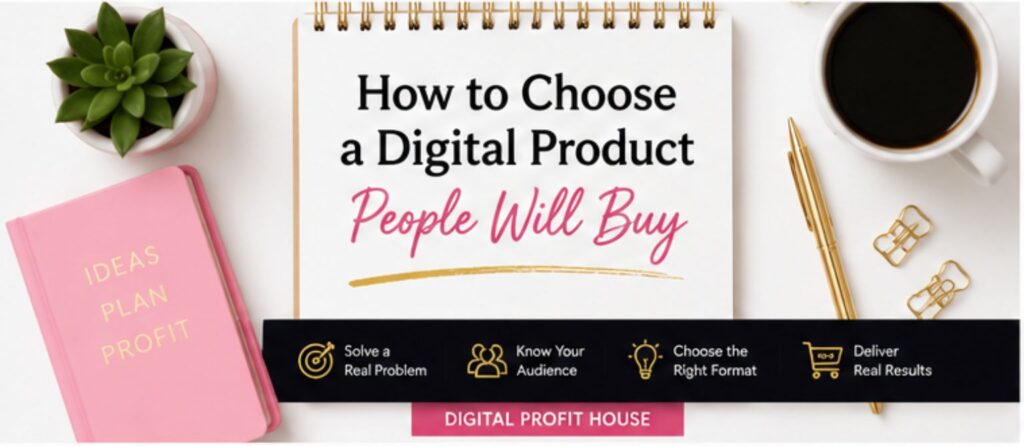
How to Choose a Digital Product People Actually Want to Buy
Choosing a digital product can be one of the most exciting parts of starting an online business.
It can also be the part where you get completely stuck.
You may have a long list of ideas: planners, ebooks, templates, courses, printables, and workbooks. They all seem like they could work, so how do you decide which one to create or sell first?
The answer usually is not to choose the prettiest idea or the product everyone else appears to be selling.
Start with the customer.
A product becomes valuable when it helps a specific person solve a real problem. Here is how to choose an offer your audience is more likely to understand, use, and purchase.
Start With a Person, Not a Product
Before deciding to create an ebook or template, think about who you want to help.
“Small business owners” is a place to start, but it is still a broad group. A new social media manager may need something completely different from an established photographer or online boutique owner.
Try getting more specific.
You might decide to help new virtual assistants organize their client process. You could help busy moms plan their weekly meals. Maybe you want to help beginner creators post consistently on social media.
Once you know who the customer is, choosing the right product becomes much easier.
Look for a Problem That Keeps Coming Up
Strong digital product ideas often come from repeated questions and frustrations.
Pay attention to what your audience asks in comments, messages, groups, or conversations. What do people regularly complain about? What task do they keep putting off? Where do they feel confused?
A creator who constantly says, “I never know what to post,” may benefit from a content calendar or caption prompt bundle.
Someone who struggles to manage monthly expenses may need a simple budgeting spreadsheet.
The problem does not have to be dramatic. It only needs to matter enough that the customer wants a better way to handle it.
Focus on One Clear Outcome
A product that promises to solve everything can be difficult to explain.
A focused product is usually easier to market because the customer quickly understands what it will help them do.
Compare these two ideas:
“A business success planner.”
“A 30-day content planner that helps service providers organize and schedule their social media posts.”
The second offer gives the customer a clearer picture of the result.
Before choosing a product, finish this sentence:
“This product helps my customer __________.”
Your answer should be simple and specific. If you need a full paragraph to explain the result, the idea may still be too broad.
Choose the Format That Makes the Solution Easier
The topic matters, but so does the product format.
A checklist is helpful when someone needs a quick reminder. A workbook works well when the customer needs to think, plan, and write. A template is useful when they want to complete a task faster. A course may be better when the topic requires detailed teaching or demonstration.
Do not automatically create a large course when a simple template would solve the problem.
The goal is not to create the biggest product. It is to deliver the result in the clearest and most convenient way.
Validate the Idea Before Building Too Much
You do not need to create a 100-page product before finding out whether people want it.
Talk about the problem first.
Share a post with a helpful tip. Ask your audience which part of the task is hardest. Create a poll comparing two possible resources. Pay attention to the questions and responses you receive.
You could also create a smaller version of the product and let a few people test it. Their feedback can help you identify missing information, confusing instructions, or extra features they would value.
Validation does not guarantee sales, but it can help you make a more informed decision before investing a lot of time.
Make the Value Easy to See
People need to understand what they are buying.
A product called “The Ultimate Success Bundle” may sound impressive, but it does not explain what is included or who should use it.
Clear usually works better than clever.
Use preview images, mockups, sample pages, or short videos to show the product. Explain what the customer receives and how each part helps.
Instead of only saying that an ebook has 40 pages, explain what the customer will be able to do after reading and applying it.
Customers are not buying a page count. They are buying the result those pages can help create.
Choose Something You Can Promote Consistently
Before selecting a product, ask whether you can create content around the topic.
If you sell a meal planner, you could share grocery tips, weekly planning routines, and budget-friendly meal ideas. If you sell business templates, you could teach organization, client management, and productivity.
Your marketing becomes easier when the product connects naturally to topics you enjoy discussing.
You do not have to talk about the product in every post. You can educate your audience around the problem, then introduce your product as a helpful next step.
Use PLR as a Starting Point
After choosing the audience and problem, you do not always have to create the entire product from the beginning.
A PLR product can give you a framework to customize. You can change the design, rewrite the content, add examples, and position it for a more specific customer.
At Digital Profit House, you can explore PLR and other digital products based on the type of audience you want to serve.
Do not choose a product simply because it is available. Choose one that you understand, can improve, and feel comfortable promoting.
The right product is not always the trendiest one. It is the one that connects a real problem to a useful solution.
Visit Digital Profit House and find a digital product you can shape into a clear solution for your ideal customer.
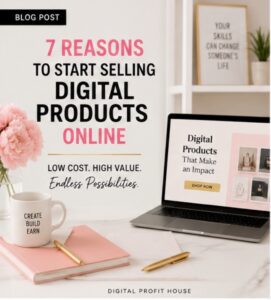
7 Reasons Selling Digital Products Is a Smart Way to Start an Online Business
Starting an online business can feel exciting and overwhelming at the same time.
You may be thinking about websites, branding, marketing, inventory, shipping, and all the other pieces that seem to come with becoming a business owner. Before long, the idea that once felt exciting starts looking like one very long to-do list.
That is one of the reasons selling digital products can be such a great place to start.
Digital products are items customers can purchase and access online. They can include ebooks, planners, templates, workbooks, courses, spreadsheets, printables, stock graphics, and many other resources.
They are not completely effortless, and they do not guarantee instant income. You still need a useful product, a clear message, and a consistent way to reach potential customers. However, they can remove many of the costs and complications that come with selling physical products.
Here are seven reasons digital products are worth considering.
1. You Don’t Need Physical Inventory
With a digital product, you do not need boxes of inventory sitting in your home or office.
There are no products to package, no shipping labels to print, and no trips to the post office. Once your files and delivery system are set up, customers can usually access their purchases automatically.
That gives you more time to focus on improving your offers, serving your customers, and promoting your business.
2. The Startup Costs Can Be Lower
Many traditional businesses require a significant investment before the first sale happens. You may need to purchase inventory, rent space, buy equipment, or pay for storage.
A digital product business can often be started with tools you already use.
Depending on the product, you may only need a writing program, spreadsheet app, design platform, or recording tool. You will still have some business expenses, but you can start small instead of investing in a large collection of products right away.
3. You Can Sell the Same Product More Than Once
A physical product usually has to be replaced after it is sold. A digital product can be purchased by multiple customers without you recreating it for every order.
You do the main creation work upfront. After that, you can continue selling the product while making updates when needed.
This is what makes digital products scalable. Your income is not always tied directly to the number of hours you work.
That does not mean the business is completely passive. Marketing, customer service, and product updates still matter. But you are not starting from zero with every sale.
4. You Can Turn What You Know Into Something Useful
You probably know something that could help someone else.
Maybe you are good at organizing, budgeting, content planning, designing, teaching, cooking, or running a small business. You do not need to be the world’s leading expert. You need to understand a problem well enough to help someone who is a few steps behind you.
Your knowledge could become a checklist, template, guide, mini-course, planner, or workbook.
The best digital products usually solve a clear problem. They save the customer time, make a task easier, or help them reach a specific result.
5. You Can Start With One Simple Product
You do not need a huge online shop before you launch.
One useful product can be enough to get started. That first product gives you a chance to learn what your audience wants, what questions they ask, and what they may want to purchase next.
You can improve your original offer, create related products, or combine several resources into a larger bundle.
Starting small also makes the process less overwhelming. Instead of trying to build an entire business in one week, you can focus on creating and promoting one strong solution.
6. You Can Work From Almost Anywhere
Because digital products are created and delivered online, the business offers a level of flexibility that many people are looking for.
You may be able to work from home, build the business around another job, or create products during the hours that fit your schedule.
That flexibility is helpful, but it still requires structure. Setting regular time aside for content, customer support, and product development can help you stay consistent without feeling like you need to be online all day.
7. Your Business Can Grow With You
Your first digital product does not have to be your final product.
You may start with a printable and later create a full planner. An ebook could eventually become a workshop or course. A collection of templates could turn into a monthly membership.
You can also update your products as you gain more experience and learn more about your customers.
That means your shop can grow at a pace that makes sense for you.
Start With Value, Not Volume
It is easy to think that more products will automatically lead to more sales. But a shop filled with random products is not always more effective than a smaller shop with clear, useful offers.
Start by thinking about the person you want to help.
What are they trying to accomplish? What is taking them too much time? What feels confusing or frustrating? Your answers can point you toward a product people will actually value.
At Digital Profit House, we believe starting should feel possible. Our digital products and PLR resources are designed to give aspiring sellers a practical foundation they can customize, improve, and use to build their own offers.
You do not need to have everything figured out today. Choose one product, make it useful, and take the next step.
Explore the digital product collection at Digital Profit House and find a product that fits the audience you want to serve.
5 Ways to Sell Digital Products Using Social Media
5 Ways to Sell Digital Products Using Social Media
Let’s be honest: social media can feel like a lot.
One minute you’re creating a Reel, the next you’re replying to comments, checking your analytics, and wondering whether anyone is actually clicking the link in your bio. But when you use it with a clear strategy, social media can be one of the easiest ways to get your digital products in front of the right people.
Whether you sell ebooks, templates, online courses, printables, presets, or digital planners, you don’t need a massive audience to make sales. You need a helpful product, a clear message, and content that makes people think, “Yep, this is exactly what I need.”
Here are five practical ways to make that happen.
1. Share Helpful Content That Solves a Real Problem
People usually don’t open Instagram, TikTok, or Facebook hoping to see a sales pitch. They’re looking for ideas, entertainment, inspiration, or answers to something they’re struggling with.
That’s where your content comes in.
Think about the problem your digital product solves, then create posts around that problem. For example, if you sell a budgeting spreadsheet, you could share simple saving tips, common budgeting mistakes, or a quick tutorial showing how you organize your monthly expenses.
If you sell a content planner, you might post caption ideas, planning tips, or ways to stop staring at a blank screen every time it’s time to create content.
The goal is to give your audience a small win. When your free content is genuinely useful, people begin to trust you. Your paid product then becomes the natural next step for anyone who wants more help.
You don’t need to hide your best advice, either. Sharing valuable information doesn’t make your product less appealing. It shows people that you know what you’re talking about.
2. Show Your Product in Action
Digital products can be tricky to sell because people can’t physically pick them up, flip through them, or try them on.
So, show them.
Create a screen recording of your template. Film yourself using your planner. Give people a quick tour of your course. Share a before-and-after example that shows what changed after using your product.
Instead of only saying, “This planner has 50 pages,” explain what those pages actually help someone do. Maybe they help a busy business owner organize a month of content in one afternoon. Maybe they help a student feel less overwhelmed during exam season.
Features tell people what they’re getting. Results help them understand why they should care.
The easier it is for someone to picture themselves using your product, the easier it becomes for them to make a buying decision.
3. Share Reviews and Customer Success Stories
You can talk about how amazing your product is all day, but hearing it from a real customer carries a little more weight.
That’s why social proof matters.
Share testimonials, reviews, customer messages, and user-generated content. A simple screenshot of a happy customer’s message can be powerful, as long as you ask permission and remove any private information.
Try to highlight specific results whenever possible.
“This was great” is nice.
“This template helped me plan my launch and saved me five hours a week” is much more convincing.
Specific testimonials help potential customers understand what your product could do for them. They also reduce some of the hesitation that comes with buying from someone new.
And don’t worry if you’re just getting started and don’t have dozens of reviews yet. One honest, detailed testimonial is more useful than ten vague ones.
4. Make It Easy for People to Buy
Sometimes the product isn’t the problem. The buying process is.
Someone sees your post, feels interested, visits your profile, clicks your link, lands on a page with twelve options, gets confused, and leaves. It happens more often than you’d think.
Keep the path from your content to your product as simple as possible.
Use a clear link in your bio, and make sure the product you’re promoting is easy to find. Your sales page should quickly answer the main questions: What is it? Who is it for? What’s included? How will it help?
Your calls to action should also be clear. Tell people exactly what to do next.
Try phrases like:
“Download the full guide through the link in my bio.”
“Grab the template and start planning today.”
“Visit my shop to see everything that’s included.”
People aren’t mind readers. A clear invitation can be the small nudge they need.
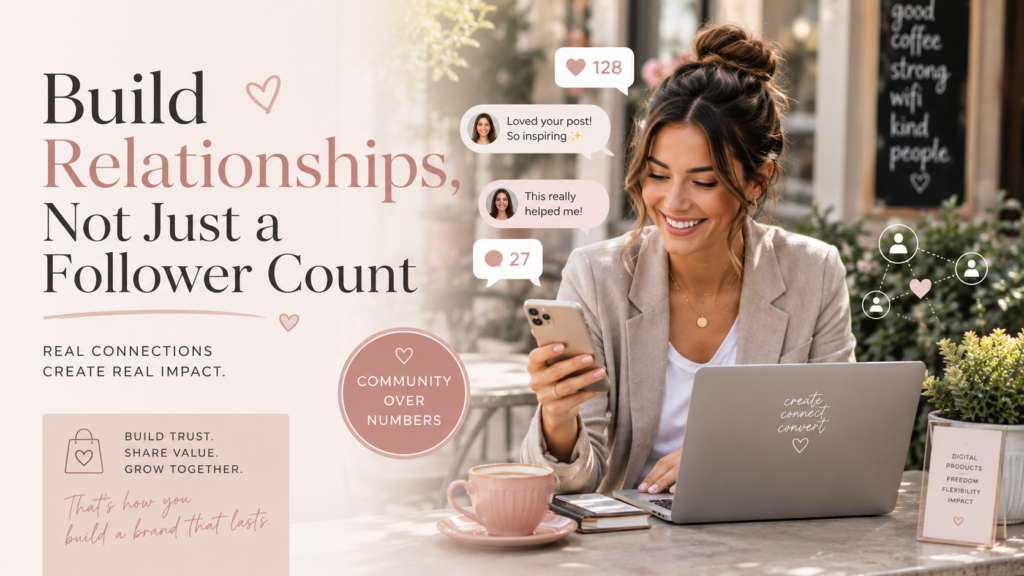
5. Build Relationships, Not Just a Follower Count
It’s easy to get caught up in numbers, but a large audience doesn’t automatically equal sales.
A smaller audience that knows, likes, and trusts you can be far more valuable.
Reply to comments. Answer questions. Respond to messages. Ask your followers what they’re struggling with. Pay attention to the words they use when describing their problems.
Those conversations do more than build relationships. They also give you content ideas and help you improve your products.
You don’t need to post on every platform, either. Choose one or two places where your ideal customers already spend time and focus on showing up consistently.
Mix educational content with personal stories, product demonstrations, customer results, and direct promotions. You’re running a business, so it’s completely okay to talk about what you sell.
Final Thoughts
Selling digital products on social media doesn’t have to feel pushy or complicated.
Start by being helpful. Show people how your product works, share real customer experiences, make the buying process simple, and take the time to connect with your audience.
You don’t need viral content or thousands of followers. You need the right people to understand how your product can make their lives easier.
Help first, build trust, and make the offer. That’s where the sales begin.