How to Launch Your First Digital Product Without a Big Audience
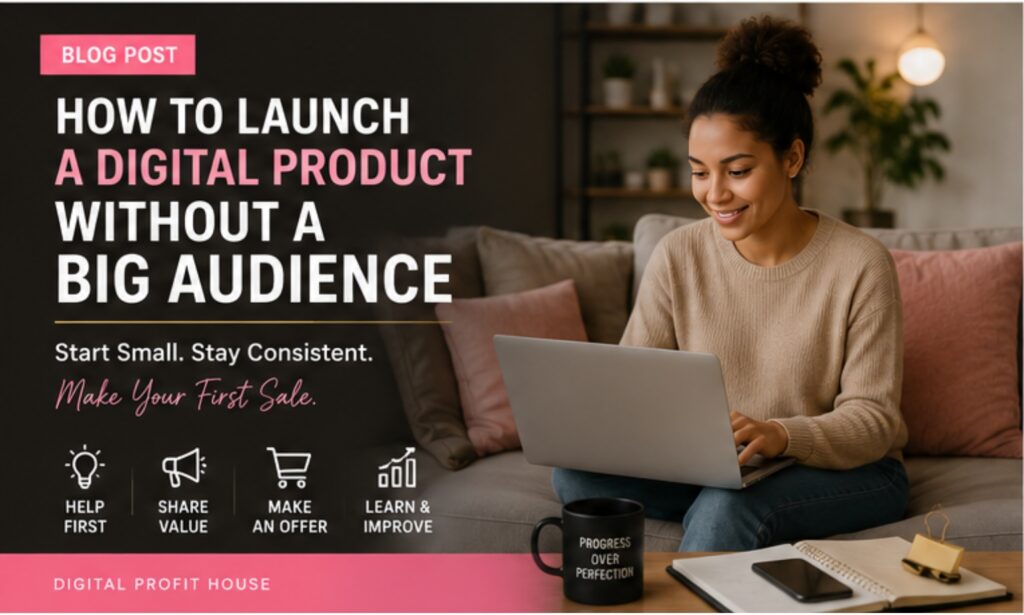
One of the most common reasons people delay launching a digital product is because they think their audience is too small.
They tell themselves they will launch after reaching 1,000 followers. Then 1,000 becomes 5,000, and the product continues sitting unfinished in a folder.
A large audience can be helpful, but it is not a requirement.
A smaller audience that understands your offer and trusts your recommendations can be more valuable than thousands of followers who are not interested in what you sell.
Your first launch does not need to be huge. It needs to be clear.
Here is how to introduce your digital product without waiting for a massive following.
Start With One Focused Offer
Launching becomes harder when you try to promote five unrelated products at the same time.
Choose one offer.
Make sure you can clearly explain who it is for, what it helps them do, and why it matters.
For example, “digital planner” is broad. “A weekly business planner for new virtual assistants” is more focused.
Your audience should not have to guess whether the product is right for them. A clear offer makes your marketing easier and helps the right people pay attention.
Create a Simple Message
You do not need a complicated launch slogan.
You need a message that connects the customer’s problem to your solution.
A simple formula is:
“You are struggling with this. Here is why it feels difficult. This product gives you a simpler way to handle it.”
Use that message across your social posts, emails, product page, and videos. Repetition is not a bad thing. People often need to hear an offer more than once before they understand it or decide to buy.
Teach Before You Promote
Helpful content gives people a reason to pay attention to your launch.
If you are selling a content planner, share tips about planning posts, staying consistent, or choosing content categories. If you are selling a budgeting workbook, share small money-management tips.
This gives your audience a useful result before they purchase anything.
It also shows that you understand the problem. When it is time to promote your product, the offer feels connected to the conversation you have already been having.
A basic launch could include a helpful educational post, a personal story, a product demonstration, a frequently asked question, and a direct sales post.
You do not need 30 pieces of content. You need a few clear messages shared consistently.
Show the Product in Action
Digital products can feel less tangible than physical products.
Your potential customer cannot pick up the item, flip through the pages, or try it on. That is why previews matter.
Show sample pages. Record your screen while using the template. Film a short video explaining how you would complete the workbook. Share a before-and-after example.
Do not reveal every part of the product, but show enough to help the customer understand what they will receive.
People feel more confident buying when the product is no longer a mystery.
Keep the Sales Page Clear
Your sales page does not need to be filled with complicated language.
It should answer the main questions a customer has:
What is this product? Who is it for? What problem does it solve? What is included? How will I receive it? What can I do with it?
Use headings, preview images, and short paragraphs to make the page easy to scan.
If the product comes with a license, explain the important terms clearly and include the full license with the purchase.
The goal is to help the customer make an informed decision, not pressure them into buying.
Talk to the People You Already Have
Do not overlook the audience that is currently paying attention.
Reply to comments. Answer direct messages. Ask questions. Learn what people are struggling with.
These conversations can lead to your first customers, but they also provide useful feedback. You may learn that your sales page needs more detail or that customers want a tutorial showing how to use the product.
Building relationships often works better than trying to reach as many random people as possible.
Continue Promoting After Launch Day
Posting about your product once is not a complete marketing plan.
People may miss the first post. They may see it while they are busy. They may be interested but need more information before making a decision.
Keep discussing the problem your product solves. Share different features, customer feedback, examples, and answers to common questions.
You can continue promoting the same product without repeating the exact same post. Each piece of content can approach the offer from a different angle.
Let Your First Launch Teach You
Your first launch is not only about the number of sales you make.
It can teach you which messages connect with people, which questions keep coming up, and which parts of the product need improvement.
Use that information to make the next launch stronger.
Digital Profit House can help you shorten the product creation stage with PLR and other digital resources you can customize for your audience. That allows you to spend more time refining your message, creating helpful content, and building customer relationships.
Do not wait until your audience feels “big enough.” Start with the people already listening and give them a clear reason to care.
Choose a digital product from Digital Profit House, customize it for your audience, and begin planning your first focused launch.
KEEP BUILDING
Continue your journey.
Use the next lesson, free resource, or product to move from learning to action.
More practical guidance
Start with a useful quick win.
Download a planner, checklist, or starter guide and take one focused action today.
Explore Free Resources →Turn the lesson into an offer.
Browse beginner-friendly products and PLR resources with clear licensing and launch guidance.
Shop Digital Products →