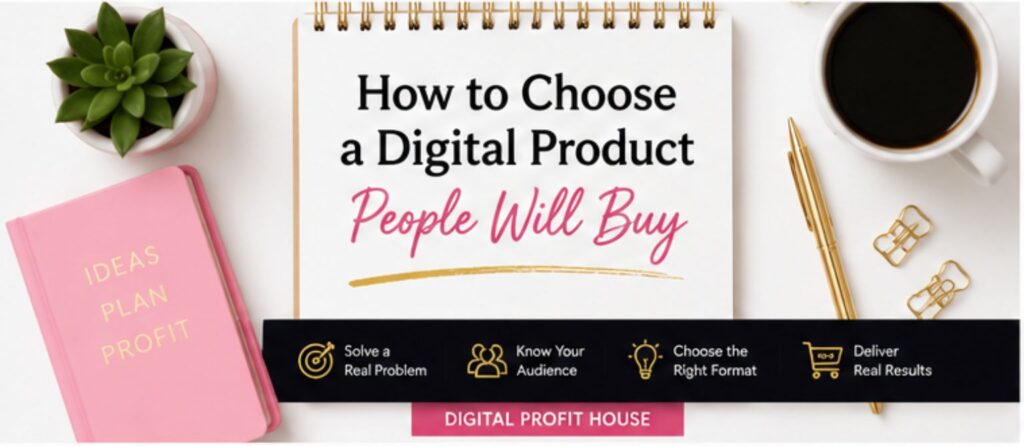
How to Choose a Digital Product People Actually Want to Buy
Choosing a digital product can be one of the most exciting parts of starting an online business.
It can also be the part where you get completely stuck.
You may have a long list of ideas: planners, ebooks, templates, courses, printables, and workbooks. They all seem like they could work, so how do you decide which one to create or sell first?
The answer usually is not to choose the prettiest idea or the product everyone else appears to be selling.
Start with the customer.
A product becomes valuable when it helps a specific person solve a real problem. Here is how to choose an offer your audience is more likely to understand, use, and purchase.
Start With a Person, Not a Product
Before deciding to create an ebook or template, think about who you want to help.
“Small business owners” is a place to start, but it is still a broad group. A new social media manager may need something completely different from an established photographer or online boutique owner.
Try getting more specific.
You might decide to help new virtual assistants organize their client process. You could help busy moms plan their weekly meals. Maybe you want to help beginner creators post consistently on social media.
Once you know who the customer is, choosing the right product becomes much easier.
Look for a Problem That Keeps Coming Up
Strong digital product ideas often come from repeated questions and frustrations.
Pay attention to what your audience asks in comments, messages, groups, or conversations. What do people regularly complain about? What task do they keep putting off? Where do they feel confused?
A creator who constantly says, “I never know what to post,” may benefit from a content calendar or caption prompt bundle.
Someone who struggles to manage monthly expenses may need a simple budgeting spreadsheet.
The problem does not have to be dramatic. It only needs to matter enough that the customer wants a better way to handle it.
Focus on One Clear Outcome
A product that promises to solve everything can be difficult to explain.
A focused product is usually easier to market because the customer quickly understands what it will help them do.
Compare these two ideas:
“A business success planner.”
“A 30-day content planner that helps service providers organize and schedule their social media posts.”
The second offer gives the customer a clearer picture of the result.
Before choosing a product, finish this sentence:
“This product helps my customer __________.”
Your answer should be simple and specific. If you need a full paragraph to explain the result, the idea may still be too broad.
Choose the Format That Makes the Solution Easier
The topic matters, but so does the product format.
A checklist is helpful when someone needs a quick reminder. A workbook works well when the customer needs to think, plan, and write. A template is useful when they want to complete a task faster. A course may be better when the topic requires detailed teaching or demonstration.
Do not automatically create a large course when a simple template would solve the problem.
The goal is not to create the biggest product. It is to deliver the result in the clearest and most convenient way.
Validate the Idea Before Building Too Much
You do not need to create a 100-page product before finding out whether people want it.
Talk about the problem first.
Share a post with a helpful tip. Ask your audience which part of the task is hardest. Create a poll comparing two possible resources. Pay attention to the questions and responses you receive.
You could also create a smaller version of the product and let a few people test it. Their feedback can help you identify missing information, confusing instructions, or extra features they would value.
Validation does not guarantee sales, but it can help you make a more informed decision before investing a lot of time.
Make the Value Easy to See
People need to understand what they are buying.
A product called “The Ultimate Success Bundle” may sound impressive, but it does not explain what is included or who should use it.
Clear usually works better than clever.
Use preview images, mockups, sample pages, or short videos to show the product. Explain what the customer receives and how each part helps.
Instead of only saying that an ebook has 40 pages, explain what the customer will be able to do after reading and applying it.
Customers are not buying a page count. They are buying the result those pages can help create.
Choose Something You Can Promote Consistently
Before selecting a product, ask whether you can create content around the topic.
If you sell a meal planner, you could share grocery tips, weekly planning routines, and budget-friendly meal ideas. If you sell business templates, you could teach organization, client management, and productivity.
Your marketing becomes easier when the product connects naturally to topics you enjoy discussing.
You do not have to talk about the product in every post. You can educate your audience around the problem, then introduce your product as a helpful next step.
Use PLR as a Starting Point
After choosing the audience and problem, you do not always have to create the entire product from the beginning.
A PLR product can give you a framework to customize. You can change the design, rewrite the content, add examples, and position it for a more specific customer.
At Digital Profit House, you can explore PLR and other digital products based on the type of audience you want to serve.
Do not choose a product simply because it is available. Choose one that you understand, can improve, and feel comfortable promoting.
The right product is not always the trendiest one. It is the one that connects a real problem to a useful solution.
Visit Digital Profit House and find a digital product you can shape into a clear solution for your ideal customer.
7 Reasons Selling Digital Products Is a Smart Way to Start an Online Business
Starting an online business can feel exciting and overwhelming at the same time.
You may be thinking about websites, branding, marketing, inventory, shipping, and all the other pieces that seem to come with becoming a business owner. Before long, the idea that once felt exciting starts looking like one very long to-do list.
That is one of the reasons selling digital products can be such a great place to start.
Digital products are items customers can purchase and access online. They can include ebooks, planners, templates, workbooks, courses, spreadsheets, printables, stock graphics, and many other resources.
They are not completely effortless, and they do not guarantee instant income. You still need a useful product, a clear message, and a consistent way to reach potential customers. However, they can remove many of the costs and complications that come with selling physical products.
Here are seven reasons digital products are worth considering.
1. You Don’t Need Physical Inventory
With a digital product, you do not need boxes of inventory sitting in your home or office.
There are no products to package, no shipping labels to print, and no trips to the post office. Once your files and delivery system are set up, customers can usually access their purchases automatically.
That gives you more time to focus on improving your offers, serving your customers, and promoting your business.
2. The Startup Costs Can Be Lower
Many traditional businesses require a significant investment before the first sale happens. You may need to purchase inventory, rent space, buy equipment, or pay for storage.
A digital product business can often be started with tools you already use.
Depending on the product, you may only need a writing program, spreadsheet app, design platform, or recording tool. You will still have some business expenses, but you can start small instead of investing in a large collection of products right away.
3. You Can Sell the Same Product More Than Once
A physical product usually has to be replaced after it is sold. A digital product can be purchased by multiple customers without you recreating it for every order.
You do the main creation work upfront. After that, you can continue selling the product while making updates when needed.
This is what makes digital products scalable. Your income is not always tied directly to the number of hours you work.
That does not mean the business is completely passive. Marketing, customer service, and product updates still matter. But you are not starting from zero with every sale.
4. You Can Turn What You Know Into Something Useful
You probably know something that could help someone else.
Maybe you are good at organizing, budgeting, content planning, designing, teaching, cooking, or running a small business. You do not need to be the world’s leading expert. You need to understand a problem well enough to help someone who is a few steps behind you.
Your knowledge could become a checklist, template, guide, mini-course, planner, or workbook.
The best digital products usually solve a clear problem. They save the customer time, make a task easier, or help them reach a specific result.
5. You Can Start With One Simple Product
You do not need a huge online shop before you launch.
One useful product can be enough to get started. That first product gives you a chance to learn what your audience wants, what questions they ask, and what they may want to purchase next.
You can improve your original offer, create related products, or combine several resources into a larger bundle.
Starting small also makes the process less overwhelming. Instead of trying to build an entire business in one week, you can focus on creating and promoting one strong solution.
6. You Can Work From Almost Anywhere
Because digital products are created and delivered online, the business offers a level of flexibility that many people are looking for.
You may be able to work from home, build the business around another job, or create products during the hours that fit your schedule.
That flexibility is helpful, but it still requires structure. Setting regular time aside for content, customer support, and product development can help you stay consistent without feeling like you need to be online all day.
7. Your Business Can Grow With You
Your first digital product does not have to be your final product.
You may start with a printable and later create a full planner. An ebook could eventually become a workshop or course. A collection of templates could turn into a monthly membership.
You can also update your products as you gain more experience and learn more about your customers.
That means your shop can grow at a pace that makes sense for you.
Start With Value, Not Volume
It is easy to think that more products will automatically lead to more sales. But a shop filled with random products is not always more effective than a smaller shop with clear, useful offers.
Start by thinking about the person you want to help.
What are they trying to accomplish? What is taking them too much time? What feels confusing or frustrating? Your answers can point you toward a product people will actually value.
At Digital Profit House, we believe starting should feel possible. Our digital products and PLR resources are designed to give aspiring sellers a practical foundation they can customize, improve, and use to build their own offers.
You do not need to have everything figured out today. Choose one product, make it useful, and take the next step.
Explore the digital product collection at Digital Profit House and find a product that fits the audience you want to serve.